


Kiểm tra độ cứng của thép dụng cụ và các bộ phận khuôn mẫu: Những điều người mua cần chuẩn bị
Kiểm tra độ cứng của thép dụng cụ và các bộ phận khuôn mẫu: Những điều người mua cần chuẩn bị
Thép dụng cụ và các bộ phận khuôn mẫu cần được kiểm tra độ cứng đáng tin cậy trước khi gia công, phê duyệt xử lý nhiệt, xử lý bề mặt, lắp ráp cuối cùng và giao hàng. Người mua nên chuẩn bị mác vật liệu, điều kiện xử lý nhiệt, phạm vi độ cứng mong muốn, vị trí thử nghiệm, kích thước mẫu, phương pháp thử nghiệm, yêu cầu hiệu chuẩn và nhu cầu báo cáo trước khi yêu cầu giải pháp kiểm tra độ cứng.
Thép dụng cụ cấp
Các loại thép dụng cụ khác nhau đòi hỏi phạm vi độ cứng và phương pháp kiểm tra xử lý nhiệt khác nhau.
Kiểm tra xử lý nhiệt
Các quy trình tôi, ram, nitriding và phủ lớp cần được kiểm tra trước khi sử dụng cuối cùng.
Địa điểm kiểm tra chính xác
Vùng lõi, bề mặt làm việc, mép khoang, vật liệu chèn và lớp được xử lý có thể cần kiểm tra khác nhau.
Báo cáo có thể truy xuất nguồn gốc
Báo cáo cần bao gồm giá trị độ cứng, phương pháp, thang đo, vị trí thử nghiệm, hiệu chuẩn và hồ sơ lô sản phẩm.
Tại sao thép dụng cụ và các bộ phận khuôn cần được kiểm tra độ cứng cẩn thận?
Thép dụng cụ và các bộ phận khuôn được sử dụng trong môi trường sản xuất đòi hỏi tải trọng cao, độ mài mòn cao, nhiệt độ cao và độ chính xác cao. Khuôn ép phun, khuôn đúc áp lực, khuôn dập, dụng cụ cắt, chi tiết khuôn, đột dập, các bộ phận dẫn hướng, khoang khuôn, lõi và thanh trượt phải duy trì độ cứng phù hợp để chống mài mòn, biến dạng, nứt vỡ và hư hỏng sớm.
Nếu độ cứng quá thấp, bề mặt khuôn có thể bị mòn nhanh, các cạnh có thể bị sụp đổ và độ chính xác kích thước có thể trở nên không ổn định. Nếu độ cứng quá cao, chi tiết có thể trở nên giòn, nứt trong quá trình hoạt động hoặc bị hỏng sau nhiều chu kỳ nhiệt. Vì lý do này, kiểm tra độ cứng nên là một phần của việc kiểm tra nguyên vật liệu đầu vào, phê duyệt xử lý nhiệt, kiểm soát quy trình và kiểm tra giao hàng cuối cùng.
Người mua không chỉ nên hỏi về máy đo độ cứng theo tên model. Họ nên chuẩn bị sẵn thông tin về mác thép dụng cụ, loại chi tiết khuôn, phạm vi độ cứng yêu cầu, quy trình xử lý nhiệt, vị trí thử nghiệm, kích thước mẫu và yêu cầu báo cáo. Những chi tiết này giúp nhà cung cấp đề xuất giải pháp kiểm tra độ cứng Rockwell, Vickers, Micro Vickers hoặc kiểm tra độ cứng toàn diện phù hợp.
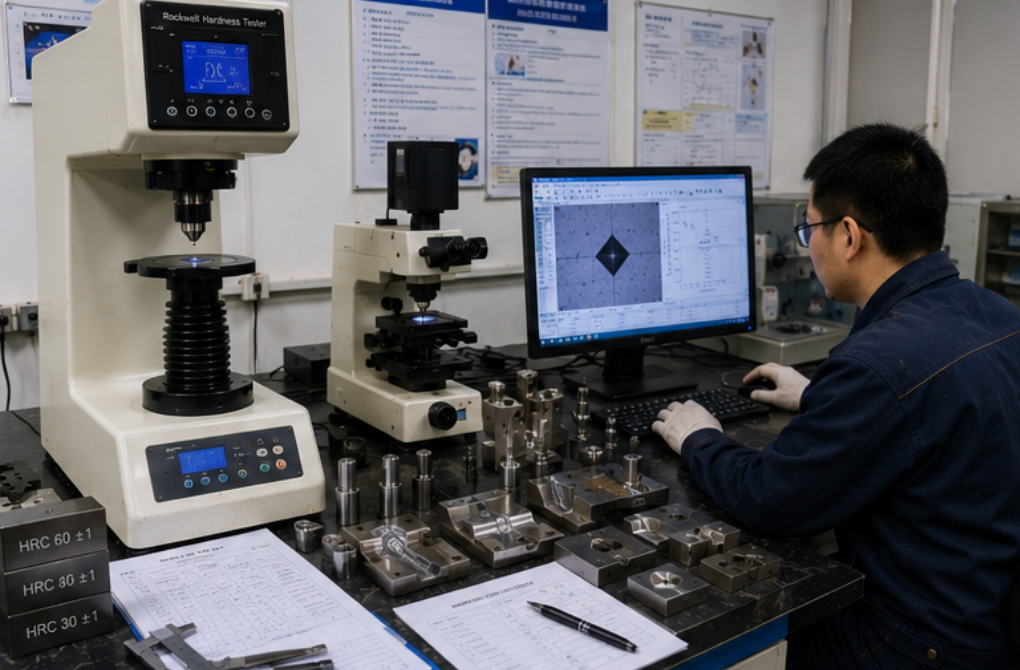
1. Chuẩn bị mác thép dụng cụ và điều kiện xử lý nhiệt
Thông tin đầu tiên mà người mua cần chuẩn bị là mác vật liệu và điều kiện xử lý nhiệt. Thép làm khuôn đã tôi cứng trước, thép công cụ gia công nguội, thép công cụ gia công nóng, thép tốc độ cao, thép làm khuôn nhựa và thép làm khuôn dập có thể có yêu cầu độ cứng rất khác nhau. Máy đo độ cứng cần phải phù hợp với phạm vi độ cứng mong muốn và thang đo yêu cầu.
Điều kiện xử lý nhiệt cũng quan trọng không kém. Khuôn mẫu sau khi tôi và ram có thể cần kiểm tra độ cứng HRC. Bề mặt khuôn được xử lý nitơ hóa có thể cần kiểm tra độ cứng Micro Vickers. Bề mặt khuôn được phủ hoặc đánh bóng có thể cần kiểm soát vị trí kiểm tra cẩn thận để tránh làm hỏng khu vực chức năng.
| Thông tin cần chuẩn bị | Tại sao điều đó lại quan trọng | Ví dụ |
|---|---|---|
| Thép dụng cụ | Xác định độ cứng dự kiến và phương pháp phù hợp. | D2, H13, P20, S7, M2, SKD11, SKD61, 1.2344 |
| Điều kiện xử lý nhiệt | Ảnh hưởng đến độ cứng bề mặt, độ cứng lõi và nguy cơ giòn. | Đã tôi cứng trước, ủ, tôi, ram, nitriding |
| Loại linh kiện khuôn | Xác định vị trí thử nghiệm và yêu cầu hỗ trợ. | Chèn, đột dập, khoang, lõi, thanh trượt, chốt dẫn hướng, khối khuôn |
| Phạm vi độ cứng dự kiến | Giúp lựa chọn khối hiệu chuẩn và thang đo thử nghiệm. | HRC 28–34, HRC 48–52, HRC 58–62, cấu hình lớp HV |
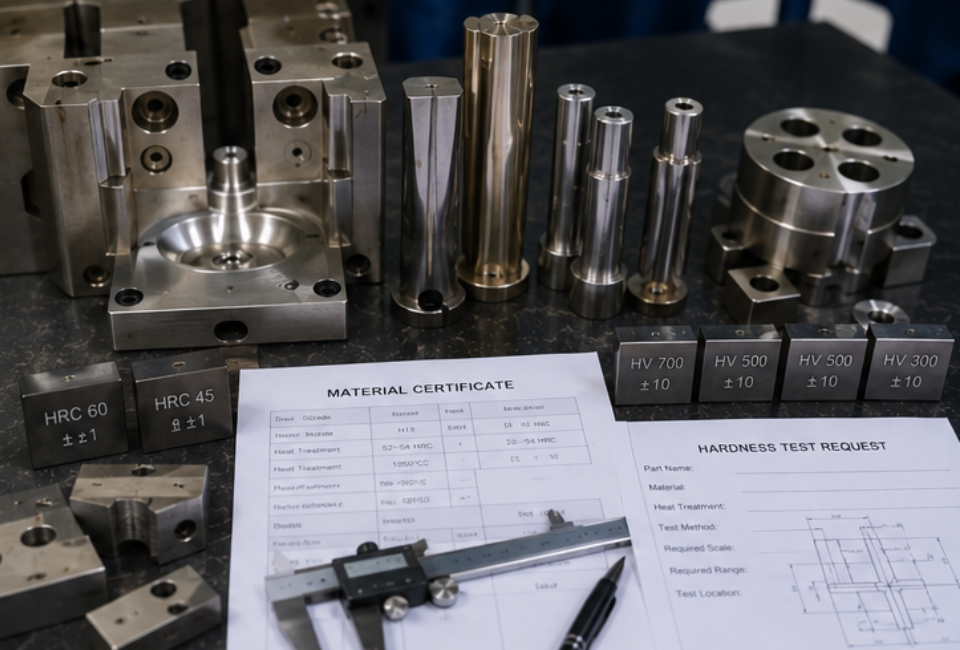
2. Xác nhận độ cứng bề mặt, độ cứng lõi hoặc độ cứng lớp cần thiết.
Thép dụng cụ và các bộ phận khuôn mẫu có thể yêu cầu các loại kiểm tra độ cứng khác nhau. Một số người mua chỉ cần độ cứng bề mặt để xác nhận phê duyệt xử lý nhiệt. Một số cần độ cứng lõi để xác nhận độ dẻo dai bên trong. Một số cần kiểm tra Micro Vickers để kiểm tra các lớp nitriding, lớp phủ, các khu vực sửa chữa hàn hoặc các vùng được xử lý bề mặt.
Đối với các bộ phận khuôn, vị trí thử nghiệm có thể rất nhạy cảm. Việc thử nghiệm trên bề mặt khoang khuôn chức năng có thể không được chấp nhận nếu vết lõm làm hỏng khuôn. Trong những trường hợp như vậy, người mua nên xác định xem việc thử nghiệm được thực hiện trên mẫu thử, khu vực không quan trọng, mặt cắt ngang, hay mẫu dự phòng từ cùng một lô xử lý nhiệt.
Người mua nên làm rõ xem họ có cần:
Độ cứng bề mặt sau khi tôi và ram.
Độ cứng lõi dành cho các khối khuôn hoặc các bộ phận khuôn dập dày hơn.
Độ cứng và độ dày lớp nitrit hóa.
Độ cứng của lớp phủ hoặc lớp xử lý bề mặt.
So sánh độ cứng sau khi sửa chữa bằng mối hàn hoặc xử lý bằng tia lửa điện.
Báo cáo độ cứng cuối cùng để khách hàng phê duyệt.
3. Chọn Rockwell Testing để kiểm tra HRC nhanh chóng
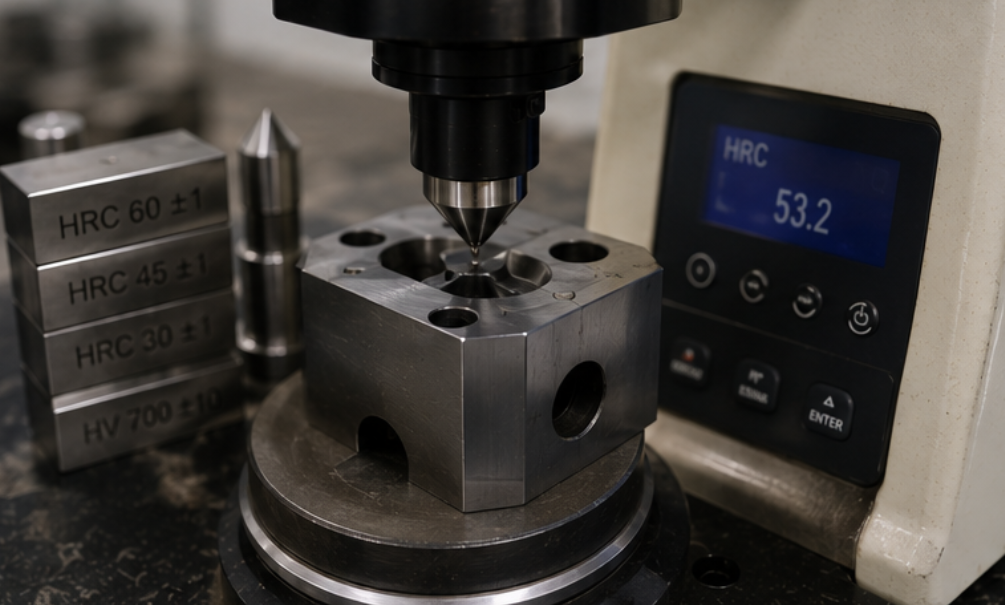
Kiểm tra độ cứng Rockwell thường được sử dụng cho thép dụng cụ và các bộ phận khuôn vì nó nhanh, cho kết quả trực tiếp và thiết thực cho việc kiểm tra độ cứng Rockwell định kỳ. Nó phù hợp với nhiều loại thép dụng cụ đã tôi và ram, thép khuôn đã tôi cứng trước, các khối khuôn, chày, mảnh chèn và các bộ phận lớn hơn khi bề mặt sạch và giá đỡ mẫu ổn định.
Tuy nhiên, phép thử Rockwell đòi hỏi độ dày vật liệu đủ, bề mặt thử nghiệm phù hợp và giá đỡ chính xác. Các chi tiết nhỏ, cạnh mỏng, vùng cong, bề mặt khoang được đánh bóng và các bộ phận hẹp có thể không phù hợp cho phép thử Rockwell trực tiếp. Trong những trường hợp này, phép thử Vickers hoặc Micro Vickers có thể phù hợp hơn.
| Ứng dụng | Phương pháp được đề xuất | Điểm kiểm tra của người mua |
|---|---|---|
| Khối thép khuôn đã được tôi cứng trước | Rockwell HRC | Kiểm tra kích thước khối, độ dày, độ nhẵn bề mặt và phạm vi độ cứng HRC. |
| Các bộ phận khuôn được tôi và ram | Rockwell HRC / Vickers HV | Xác nhận phạm vi chấp nhận và vị trí thử nghiệm. |
| Các chi tiết khuôn nhỏ hoặc các bộ phận mỏng | Vickers / Micro Vickers | Tránh tạo vết lõm quá lớn hoặc ảnh hưởng quá nhiều từ lớp lót. |
| Bề mặt khuôn được xử lý nitrat hóa hoặc phủ | Micro Vickers | Nếu cần độ sâu lớp, hãy sử dụng tải trọng thấp phù hợp và mặt cắt ngang được đánh bóng. |
4. Sử dụng phương pháp kiểm tra Micro Vickers cho các lớp nitrided, lớp phủ và các khu vực nhỏ.
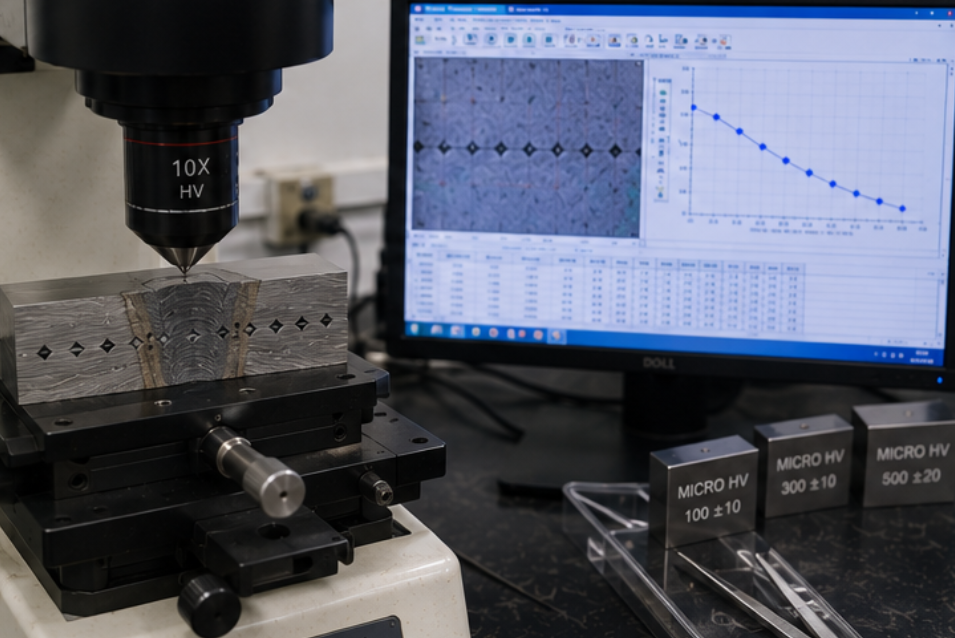
Nhiều chi tiết khuôn được xử lý bằng phương pháp nitriding, phủ lớp, đánh bóng, sửa chữa hoặc xử lý bề mặt. Trong những trường hợp này, vết lõm lớn có thể không cung cấp thông tin hữu ích và có thể làm hỏng bề mặt làm việc. Phương pháp kiểm tra Micro Vickers sử dụng vết lõm nhỏ hơn và lực thử thấp hơn, do đó phù hợp với các lớp mỏng, diện tích nhỏ, mặt cắt ngang và các hồ sơ độ cứng chi tiết.
Đối với thép công cụ được tôi nitơ hoặc các bộ phận khuôn được xử lý bề mặt, người mua có thể cần kiểm tra cả độ cứng lớp bề mặt và độ dày lớp hiệu quả. Điều này thường yêu cầu cắt một mẫu đại diện, gắn nó, đánh bóng mặt cắt ngang và kiểm tra nhiều điểm Micro Vickers từ bề mặt vào bên trong.
Kiểm tra độ cứng Vickers vi mô rất hữu ích cho:
Phân tích độ sâu lớp và bề mặt thép công cụ được tôi nitơ hóa.
Các bộ phận khuôn được phủ và các lớp bề mặt mỏng.
Các chi tiết khuôn nhỏ, chốt, đột dập và các linh kiện chính xác.
Các khu vực được hàn sửa chữa hoặc xử lý cục bộ.
Kiểm tra độ cứng mặt cắt ngang.
Các báo cáo của khách hàng yêu cầu hình ảnh vết lõm và đường cong biên dạng.
5. Chuẩn bị cỡ mẫu, vị trí thử nghiệm và điều kiện bề mặt.
Trước khi yêu cầu giải pháp kiểm tra độ cứng, người mua nên chuẩn bị thông tin về mẫu thực tế. Các bộ phận khuôn có thể lớn, nặng, được đánh bóng, cong, mỏng hoặc không đều. Máy kiểm tra phải có đủ chiều cao thử nghiệm, độ sâu họng, khả năng chịu tải và giá đỡ phù hợp cho chi tiết thực tế.
Tình trạng bề mặt cũng rất quan trọng. Lớp oxit, lớp vật liệu tái tạo do gia công EDM, lớp phủ, điều kiện đánh bóng, dầu, rỉ sét hoặc các vết mài thô có thể ảnh hưởng đến kết quả độ cứng. Nếu bề mặt thử nghiệm là khoang khuôn chức năng, người mua nên xác nhận xem có cho phép hư hỏng do vết lõm hay không hoặc có nên sử dụng mẫu thử hay không.
| Mục chuẩn bị | Tại sao điều đó lại quan trọng | Những gì người mua nên gửi |
|---|---|---|
| Kích thước mẫu | Xác định công suất máy và không gian thử nghiệm | Chiều dài, chiều rộng, chiều cao, đường kính, trọng lượng, bản vẽ hoặc hình ảnh |
| Địa điểm thử nghiệm | Giúp tránh việc kiểm tra sai khu vực hoặc làm hỏng các bề mặt chức năng. | Đánh dấu khu vực khoang, chi tiết chèn, lõi, cạnh, bề mặt hoặc mặt cắt ngang. |
| Tình trạng bề mặt | Ảnh hưởng đến độ chính xác của việc thụt lề và tính ổn định khi đọc. | Đánh bóng, mài, xử lý bằng tia lửa điện (EDM), xử lý nitơ hóa, phủ lớp, bề mặt thô hoặc gia công cơ khí. |
| Yêu cầu báo cáo | Xác định cấu hình phần mềm và tài liệu. | PDF, Excel, hình ảnh, hồ sơ độ cứng, bản ghi hiệu chuẩn |
6. Khối chuẩn, khuôn dập và khả năng truy xuất nguồn gốc báo cáo
Việc kiểm tra độ cứng thép dụng cụ cần được xác nhận bằng các khối chuẩn hiệu chuẩn phù hợp với phạm vi độ cứng dự kiến. Khối chuẩn hiệu chuẩn HRC thường được sử dụng cho phép thử Rockwell. Khối chuẩn HV hoặc Micro HV được sử dụng cho phép thử Vickers và Micro Vickers. Tình trạng của đầu đo cũng cần được kiểm tra vì đầu đo bị hỏng có thể gây ra kết quả không ổn định hoặc không chính xác.
Đối với các bộ phận khuôn mẫu cung cấp cho khách hàng khó tính, việc truy xuất nguồn gốc báo cáo rất quan trọng. Báo cáo cần thể hiện rõ mác vật liệu, điều kiện xử lý nhiệt, phương pháp thử nghiệm, thang đo, vị trí thử nghiệm, giá trị độ cứng, hồ sơ hiệu chuẩn, người vận hành và ngày kiểm tra. Đối với thử nghiệm Micro Vickers, hình ảnh vết lõm và đường cong biểu diễn độ cứng cũng có thể được yêu cầu.
Một báo cáo hữu ích cần bao gồm:
Mác thép dụng cụ và tên thành phần khuôn.
Điều kiện xử lý nhiệt hoặc xử lý bề mặt.
Phương pháp thử nghiệm, quy mô, tải trọng và tiêu chuẩn.
Địa điểm thử nghiệm và nhận dạng mẫu.
Giá trị độ cứng và phạm vi chấp nhận được.
Giá trị khối hiệu chuẩn và bản ghi xác minh.
Người vận hành, ngày, mã số máy và số báo cáo.
Hình ảnh vết lõm hoặc đường cong biểu diễn độ cứng nếu cần.
Những câu hỏi quan trọng trước khi yêu cầu giải pháp kiểm tra độ cứng thép dụng cụ
Trước khi yêu cầu báo giá, người mua nên chuẩn bị mẫu thực tế và thông tin kiểm tra. Điều này giúp nhà cung cấp đề xuất máy móc, phụ kiện, thiết bị chuẩn bị mẫu và chức năng báo cáo phù hợp.
Loại thép dụng cụ hoặc thép khuôn nào sẽ được kiểm tra?
Vật liệu này đã được ủ, làm cứng sơ bộ, tôi, ram, nitriding, phủ lớp hoặc sửa chữa chưa?
Những bộ phận nào của khuôn cần được kiểm tra: chi tiết chèn, khoang khuôn, lõi khuôn, chày khuôn, khối khuôn, thanh trượt, chốt dẫn hướng hoặc tấm khuôn?
Cần sử dụng thang đo độ cứng nào: HRC, HRB, HV, Micro HV, HBW, hay thang đo khác?
Độ cứng dự kiến nằm trong khoảng nào?
Nên tiến hành kiểm tra độ cứng ở đâu?
Có được phép tạo vết lõm trên bề mặt làm việc hay cần phải sử dụng mẫu thử?
Kích thước mẫu, trọng lượng, điều kiện bề mặt và hình dạng là gì?
Bạn có cần thiết bị chuẩn bị mẫu cho thử nghiệm mặt cắt ngang không?
Khách hàng có cần báo cáo dạng PDF, hình ảnh vết lõm, hồ sơ hiệu chuẩn hoặc đường cong biểu diễn độ cứng không?
Kết luận: Người mua nên chuẩn bị nhiều hơn là chỉ một phạm vi độ cứng.
Việc kiểm tra độ cứng đối với thép dụng cụ và các bộ phận khuôn mẫu cần được lên kế hoạch dựa trên các rủi ro ứng dụng thực tế. Người mua nên chuẩn bị thông tin về mác vật liệu, điều kiện xử lý nhiệt, loại linh kiện, vị trí thử nghiệm, kích thước mẫu, điều kiện bề mặt, thang đo độ cứng và các yêu cầu báo cáo trước khi lựa chọn thiết bị.
Thử nghiệm Rockwell rất thiết thực để kiểm tra nhanh độ cứng HRC trên nhiều loại thép dụng cụ và khuôn đúc. Thử nghiệm Vickers và Micro Vickers phù hợp hơn cho các khu vực nhỏ, lớp nitrided, lớp phủ, vùng sửa chữa và mặt cắt ngang. Thiết bị chuẩn bị mẫu cũng có thể cần thiết khi cần phân tích độ sâu lớp hoặc mặt cắt ngang.
Nếu nhà máy của bạn kiểm tra thép dụng cụ, các chi tiết khuôn, các bộ phận khuôn dập, đột dập, khoang khuôn, lõi khuôn hoặc các bộ phận khuôn được tôi nitơ, thì một giải pháp kiểm tra độ cứng toàn diện có thể giúp cải thiện khả năng kiểm soát xử lý nhiệt, sự hài lòng của khách hàng và độ tin cậy lâu dài của khuôn.
Câu hỏi thường gặp
Loại máy đo độ cứng nào thường được sử dụng để kiểm tra độ cứng của thép dụng cụ?
Máy đo độ cứng Rockwell thường được sử dụng để kiểm tra nhanh độ cứng HRC trên thép dụng cụ, trong khi máy đo Vickers hoặc Micro Vickers được sử dụng cho các khu vực nhỏ hơn và các lớp bề mặt.
Việc kiểm tra độ cứng có thể làm hỏng các bộ phận của khuôn không?
Đúng vậy, thử nghiệm độ cứng tạo ra vết lõm. Đối với bề mặt khuôn gia công, người mua nên xác nhận xem có được phép thử nghiệm trên chi tiết đó hay không, hoặc liệu có cần sử dụng mẫu thử nghiệm hay không.
Khi nào cần thực hiện kiểm tra Micro Vickers đối với các bộ phận khuôn đúc?
Kiểm tra độ cứng Micro Vickers rất hữu ích cho các lớp nitrided, lớp phủ, các chi tiết nhỏ, các khu vực sửa chữa bằng hàn, các lớp mỏng và các đường cong độ cứng mặt cắt ngang.
Người mua nên gửi những gì trước khi yêu cầu báo giá?
Người mua cần cung cấp thông tin về cấp vật liệu, điều kiện xử lý nhiệt, kích thước mẫu, thang đo độ cứng, vị trí thử nghiệm, phạm vi độ cứng mong muốn và các yêu cầu về báo cáo.
Bạn cần giải pháp kiểm tra độ cứng cho thép dụng cụ hoặc các bộ phận khuôn mẫu?
Hãy chia sẻ mác thép dụng cụ, loại linh kiện khuôn, quy trình xử lý nhiệt, thang độ cứng, kích thước mẫu, vị trí thử nghiệm và nhu cầu báo cáo của bạn. Chúng tôi có thể giúp bạn đề xuất các thiết bị đo độ cứng Rockwell, Vickers, Micro Vickers, khối hiệu chuẩn, đồ gá, thiết bị chuẩn bị mẫu và các giải pháp kiểm soát chất lượng toàn diện phù hợp.
Kiểm tra độ cứng đối với thép dụng cụ và các bộ phận khuôn mẫu: Những điều người mua cần chuẩn bị trong phiếu yêu cầu mua hàng.
Đối với phòng thí nghiệm kiểm soát chất lượng, việc lựa chọn máy đo độ cứng hoặc thiết bị phân tích cấu trúc kim loại không chỉ đơn thuần là so sánh các mẫu mã. Người mua cần xác nhận vật liệu mẫu, thang đo độ cứng, tải trọng thử nghiệm, phương pháp đọc vết lõm, định dạng báo cáo phần mềm, yêu cầu hiệu chuẩn, cấu hình đồ gá và hỗ trợ sau bán hàng. Một bản đặc tả rõ ràng giúp nhà cung cấp đề xuất một hệ thống thiết thực thay vì chỉ báo giá thấp.
Lộ trình sản phẩm liên quan nên bắt đầu từdòng sản phẩm thiết bị kiểm tra,Máy đo độ cứng ValuePro,giải pháp kiểm tra chất lượng chính xác,năng lực nhà máy,vỏ dụng cụ thử nghiệm,liên hệ với nhóm đo lườngCác trang này giúp khách truy cập chuyển từ bài viết sang các danh mục sản phẩm máy đo độ cứng thực tế, chuẩn bị mẫu luyện kim và kiểm tra chính xác. Điều này cũng củng cố liên kết nội bộ xoay quanh chủ đề đo lường và kiểm soát chất lượng.
Thông tin người mua cần chuẩn bị trước khi nhận báo giá
- Liệt kê các vật liệu chính, chẳng hạn như thép, nhôm, hợp kim đồng, các bộ phận đúc, rèn, phủ hoặc xử lý nhiệt.
- Xác nhận thang đo cần thiết, bao gồm Rockwell, Brinell, Vickers, Micro Vickers, Leeb, Barcol, Shore hoặc phương pháp kiểm tra khác.
- Chuẩn bị kích thước mẫu, điều kiện bề mặt, phạm vi độ cứng dự kiến, số lượng lô và xem có cần xuất báo cáo tự động hay không.
- Hãy hỏi về các tùy chọn thiết bị cố định, khối hiệu chuẩn, hình ảnh vết lõm, ngôn ngữ phần mềm, định dạng báo cáo và hỗ trợ đào tạo.
- Vui lòng xác nhận các phụ tùng thay thế, điều kiện lắp đặt, quy trình bảo hành và dịch vụ hiệu chuẩn trong tương lai trước khi đặt hàng.
Xem thêm thông tin chi tiết về trang sản phẩm và dịch vụ.
Khách tham quan có thể tiếp tục so sánh một bộ thiết bị phòng thí nghiệm hoàn chỉnh bằng cách...Máy đo độ cứng Rockwell,Máy đo độ cứng Brinell,Máy đo độ cứng Vickers,máy đo độ cứng vi mô,Máy đo độ cứng Barcol,giải pháp đo độ nhám bề mặtCác liên kết này bao gồm lựa chọn thiết bị, chuẩn bị mẫu, hiệu chuẩn và năng lực sản xuất của nhà máy. Đối với người mua cần hỗ trợ dự án,sản phẩm luyện kim,dòng máy mài đánh bóng kim loại,dòng máy cắt kim loạiCung cấp bước tiếp theo cho việc liên lạc về các trường hợp và yêu cầu thông tin.
Kiểm tra chất lượng trước khi chấp nhận
Trước khi nghiệm thu hệ thống kiểm tra độ cứng, người mua cần kiểm tra độ chính xác tải trọng, kết quả đọc quang học, báo cáo phần mềm, độ khớp của giá đỡ mẫu, độ lặp lại, giá trị khối hiệu chuẩn và quy trình làm việc của người vận hành. Đối với thiết bị chuẩn bị mẫu luyện kim, danh sách kiểm tra cần bao gồm độ ổn định khi cắt, tính nhất quán khi mài và đánh bóng, chất lượng lắp ráp, sự sẵn có của vật tư tiêu hao và các biện pháp an toàn.
| Đánh giá sản phẩm | Tại sao điều đó lại quan trọng |
|---|---|
| Kiểm tra quy mô và tải | Đảm bảo máy móc phù hợp với vật liệu và phương pháp tiêu chuẩn. |
| Phần mềm và báo cáo | Cải thiện khả năng truy xuất nguồn gốc và giúp phòng thí nghiệm chia sẻ kết quả với khách hàng. |
| Hiệu chuẩn và thiết bị cố định | Giảm thiểu sai số đo lường và cải thiện tính lặp lại. |
Giá trị tìm kiếm và truy vấn
Bài viết này kết nối các câu hỏi của người mua với các trang sản phẩm thực tế, thuật ngữ kỹ thuật và các bước mua hàng. Mục đích là thu hút những khách truy cập đang tìm kiếm thông tin về lựa chọn máy đo độ cứng, thiết bị luyện kim, dụng cụ hiệu chuẩn và thiết lập phòng thí nghiệm kiểm soát chất lượng công nghiệp, sau đó hướng dẫn họ đến đúng con đường tìm kiếm thông tin cần thiết.